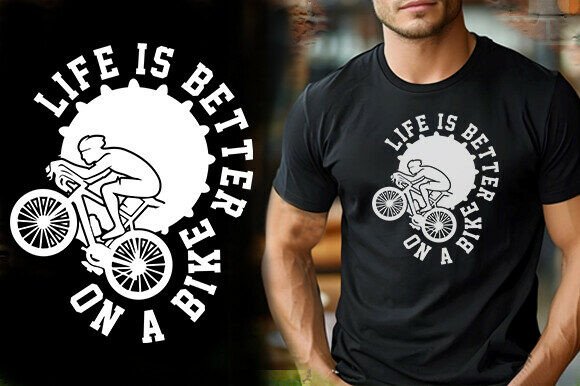
LIFE is BETTER on a BIKE TSHIRT DESIGN Review
When I first opened the file for LIFE is BETTER on a BIKE TSHIRT DESIGN, my immediate thought wasn't about the slogan itself, but how it would translate from a digital graphic into physical thread. As someone who has spent years refining embroidery projects for small businesses and personal gifts, I know that a great visual concept can sometimes fail in execution if the design isn't built with stitch density and fabric texture in mind. This piece falls under the T-Shirt Designs category, but its potential extends far beyond standard apparel.
The mood of this design is undeniably energetic and optimistic. It speaks to the freedom of the open road and the joy of cycling culture. For an embroidery designer, the layout feels balanced, offering enough negative space to allow the stitches to breathe while keeping the message bold and legible. When I imagine this stitched onto a canvas tote bag or a denim sweatshirt, the visual personality shines through without feeling cluttered. It creates a sense of community and shared passion, which is exactly what buyers look for when they are shopping for personalized gifts or boutique merchandise.
From Digital File to Finished Product
Let me walk you through a real scenario where I tested this LIFE is BETTER on a BIKE TSHIRT DESIGN. I was preparing a batch of custom embroidered patches for a local bike club's annual charity ride. The goal was to create something that looked professional yet had that handmade charm that customers love. We decided to use a medium-weight twill fabric for the patches because it holds up well to frequent washing and handling.
The moment the machine started stitching, I paid close attention to how the threads laid down. The design relies heavily on a clean satin stitch for the lettering, which gave the words a smooth, glossy finish that stands out against the textured fabric. However, I noticed that the curves of the bicycle elements required careful tension adjustment. If the hoop size isn't perfect, those curves can pucker, especially on thinner fabrics. In our test run, we used a cut-away stabilizer behind the twill to ensure the design held its shape without distorting the fabric grain.
The result was a patch that felt substantial and high-quality. When I showed it to the club members, their reaction was immediate: "This looks like something I'd actually wear." That validation is crucial for any Etsy seller or craft business owner. It proves that the design isn't just a pretty picture; it's a functional asset that adds value to the final product. Whether you are selling these as standalone patches or attaching them to hats, aprons, or baby onesies, the clarity of the stitches builds trust with your buyer.
Where This Design Shines
This embroidery file is incredibly versatile. While the title suggests it is a T-Shirt Design, its scalability makes it perfect for a wide range of custom apparel and home goods. I have seen similar designs work beautifully on:
- Sweatshirts and Hoodies: The bold text contrasts perfectly with the soft fleece texture, making it ideal for fall and winter collections.
- Baby Embroidery: On a cotton bodysuit, the playful theme adds a sweet touch that parents love for nursery decor or baby shower gifts.
- Holiday Embroidery: Imagine this stitched on a tea towel or a kitchen apron during the holiday season. It serves as a unique gift for the cyclist in your family who loves to cook.
- Commercial Embroidery: For small shop products, this design offers a professional look that elevates brand consistency across various items like tote bags and caps.
The stitch density is generally well-managed, allowing for good coverage without creating a stiff, board-like feel on the garment. This is essential for comfort, especially when the item is worn directly against the skin. The design assets provided are flexible enough to be resized for different hoop sizes, though I always recommend testing the smallest version first to ensure the fine details remain sharp.
Areas Requiring Careful Attention
Despite its strengths, there are specific situations where LIFE is BETTER on a BIKE TSHIRT DESIGN requires extra caution. One major consideration is the fabric texture. On highly textured materials like chunky knits or bouclé, the definition of the smaller letters might get lost. In these cases, you may need to adjust the thread colors to increase contrast or simplify the design slightly.
Another critical factor is the placement on curved surfaces. If you plan to embroider this on a baseball cap or a fitted hat, the curvature can stretch the design unevenly. The top of the cap often causes the center of the design to gap, while the sides can pull tight. I advise using a curved hoop specifically designed for caps and ensuring the stabilizer is firm enough to support the fabric during the stitching process.
Dense stitch areas can also pose challenges on thin or stretchy fabrics. If the design includes large fill stitches, they might cause the underlying fabric to pucker or tear over time, particularly after multiple washes. For these scenarios, switching to a running stitch for certain outlines or reducing the fill density can make a significant difference in the durability of the finished product.
Practical Tips for the Embroidery Designer
Before you commit to a full production run, there are several steps every professional should take. First, always test the embroidery project on scrap fabric that matches your intended material. This allows you to check the thread color contrast and see how the design behaves under different lighting conditions. A design that looks vibrant on a screen might appear dull on a dark navy shirt, so reviewing it in black and white mockups can help you visualize the true contrast.
Confirming the license terms is equally important. The product description mentions "100 Copy Right Free," which is excellent for commercial use, but you must verify if this applies to both the digital file and the finished physical items you sell. Some licenses allow you to sell the embroidery but restrict the resale of the digital file itself. Always read the fine print to protect your crafter business and avoid legal issues.
When selecting your stabilizer, choose one that complements the weight of your fabric. Heavy-duty cut-away stabilizers are best for items that will be washed frequently, such as tote bag designs or work aprons. For delicate items like baby clothes, a water-soluble stabilizer might be preferable to avoid any residue left on the fabric.
Finally, consider the aesthetic impact on your brand. A well-executed machine embroidery design signals quality and attention to detail. Customers are more likely to pay a premium for a handmade product that looks polished and professional. By carefully managing the applique design elements (if applicable) and ensuring the satin stitch edges are clean, you elevate the perceived value of your small shop product.
In conclusion, LIFE is BETTER on a BIKE TSHIRT DESIGN is a strong contender for anyone looking to expand their portfolio of design assets. Its positive message and adaptable layout make it suitable for everything from personal gifts to large-scale commercial runs. Just remember to respect the limitations of the fabric and the machine, and you will create beautiful, lasting pieces that your customers will cherish.