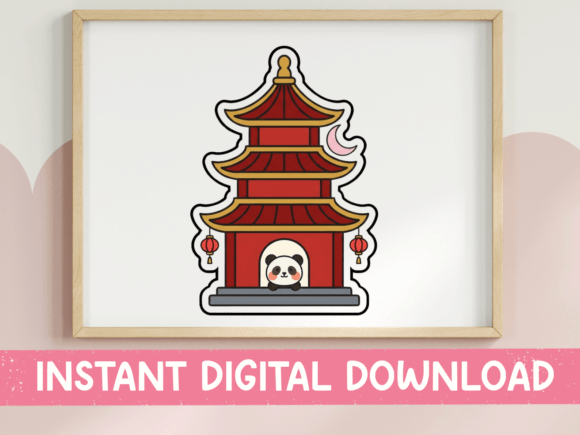
Kawaii Panda Pagoda Review
As a designer who spends more time troubleshooting stitch errors than sleeping, I don’t just look at an embroidery file and see pixels. I see tension settings, potential puckering, thread breaks, and how the final product will sit on a customer’s shelf or chest. When I first pulled up Kawaii Panda Pagoda Chinese Temple, my immediate reaction was a mix of curiosity and caution. It sits right at that intersection where cultural aesthetics meet modern "kawaii" trends—a combination that can be incredibly charming if executed well, but disastrous if the design lacks structural integrity.
This piece features a bold red and gold multi-tiered pagoda with curved rooftop layers and red hanging lanterns on each side. While the description highlights the architectural elements, the true test for any embroidery professional is how these details translate from screen to fabric. Does it hold its shape? Is the color palette too busy for standard thread stocks? And most importantly, does it feel like a cohesive design asset or just a collection of shapes?
The First Impression: Mood and Visual Personality
The moment you engage with this design, the mood is unmistakably festive yet playful. The juxtaposition of traditional Chinese architecture with the soft, approachable vibe of kawaii culture creates a unique visual personality. For a small business owner or Etsy seller, this kind of distinct character is gold. It isn’t just another generic logo; it tells a story. The red and gold palette screams celebration, making it naturally suited for holiday seasons, Lunar New Year collections, or even as a unique statement piece for spring apparel.
However, from a practical standpoint, the density of the colors requires careful planning. Red and gold are warm, high-energy tones. If the stitch density is too high, the fabric can become stiff and board-like, ruining the drape of a t-shirt or the softness of a baby item. My initial assessment is that this design relies heavily on the contrast between the vibrant threads and the base fabric. On a white or cream background, it pops. On a dark background, the red might get lost unless specific underlay stitches are used to push the top thread through.
Real-World Application: Where This Design Shines
I’ve been thinking about how Kawaii Panda Pagoda Chinese Temple would perform in actual production runs. Let’s talk about custom apparel first. This design has excellent potential for sweatshirt embroidery. The vertical structure of the pagoda mirrors the natural flow of a garment’s front panel. Imagine this centered on a heavyweight cotton blend hoodie—the red lanterns adding a pop of color against a neutral grey or navy fabric. It feels premium, not cheap.
Beyond clothing, this graphic works beautifully for home decor and lifestyle products. A tote bag design featuring this motif could easily become a bestseller in craft fair markets. The sturdy nature of canvas handles the embroidery weight well, and the cultural theme appeals to shoppers looking for meaningful, aesthetic gifts. Similarly, consider its application on kitchen towels or aprons. The "kawaii" aspect adds a touch of whimsy to functional items, making them perfect for personalized gifts for housewarmings or holidays.
For those selling digital products or creating printable mockups, this design offers strong versatility. It fits well within the broader category of Graphics and T-Shirt Designs, but its embroidery-specific qualities mean it stands out in a sea of vector-only assets. Buyers looking for commercial embroidery files often seek designs that are both visually striking and technically sound. This pagoda offers that balance, provided the stitching is optimized.
Specific Use Cases to Consider
- Embroidered Patches: The defined borders of the pagoda make it ideal for iron-on or sew-on patches. The structured shape holds up well when cut out, especially if finished with a satin stitch border.
- Baby Embroidery: Soft bodysuits or muslin blankets benefit from the gentle curves of the lanterns and the cute factor of the theme. Just ensure the thread count isn’t so dense that it irritates sensitive skin.
- Holiday Embroidery: This is a prime candidate for seasonal marketing. Whether for Lunar New Year or general festive gifting, the red and gold palette is universally recognized and appreciated.
Technical Challenges and Areas of Caution
No design is without its pitfalls, and Kawaii Panda Pagoda Chinese Temple is no exception. As an experienced reviewer, I must highlight where this file might cause headaches during the hoop-up process.
First, pay close attention to small details. The lanterns and the intricate roof lines likely contain fine running stitch or satin stitch segments. On textured fabrics or thin materials, these tiny details can disappear or distort. If you are working with a loose-weave linen or a stretchy jersey knit, the stability of the fabric becomes critical. Without proper stabilizer—likely a cut-away for heavier garments or a tear-away for lighter items—you risk significant distortion.
Another concern is color blending. Red and gold can sometimes clash if the shades aren’t carefully chosen. If your machine’s thread selection leans towards a bright orange-gold instead of a metallic or deep yellow, the overall effect might look muddy rather than rich. I strongly advise testing thread color contrast on scrap fabric before committing to a full production run. Additionally, check the stitch density in dense areas. If the fill stitch is too packed, the design may pucker, especially on lightweight t-shirts or delicate pillow covers.
Key Technical Checks Before Production
- Hoop Size Verification: Ensure the design fits comfortably within your standard hoops without requiring awkward re-hooping, which can misalign the image.
- Black and White Mockup: View the design in grayscale to check for value contrast. If the red and gold blend together in black and white, they might lack definition in color too.
- Stabilizer Selection: Match the stabilizer to the fabric weight. Heavy stabilizers for heavy fabrics, light stabilizers for light fabrics.
- Density Review: Look for areas where stitches overlap excessively. These are prime spots for needle breakage and thread jams.
Final Verdict: Value and Professional Appeal
Does Kawaii Panda Pagoda Chinese Temple earn a spot in your library? Yes, but with conditions. It is a strong design for brands that want to convey warmth, culture, and playfulness. It enhances brand consistency by offering a unique visual identity that stands out from generic floral or abstract motifs.
For the Etsy seller or craft business owner, this design boosts buyer engagement because it sparks conversation. Customers love stories behind their purchases, and a pagoda with lanterns invites questions about its meaning. However, professionalism hinges on execution. A poorly stitched version of this beautiful concept will hurt your reputation faster than a mediocre design would. Take the time to test it. Inspect the edges. Confirm whether the design works for both personal use and commercial projects by reviewing the licensing terms.
Ultimately, this file is a versatile tool in the arsenal of any embroidery designer. It bridges the gap between traditional artistry and modern consumer tastes. If you handle the technical aspects with care—respecting stitch density, choosing the right threads, and supporting the fabric properly—Kawaii Panda Pagoda Chinese Temple can transform into a stunning finished product that customers will cherish. Just remember: the magic isn’t just in the file; it’s in the finish.